


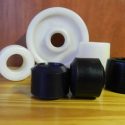
In industrial and commercial applications, precision matters. From sealing hydraulic systems to supporting load-bearing components, rubber products must meet exact performance specifications to ensure reliability and longevity. The manufacturing method used to produce these components plays a critical role in determining their durability, flexibility, and resistance to environmental factors.
Fuzion Trading is South Africa’s leading hydraulic seal manufacturer and supplier of precision rubber products. With a long-standing history of excellence and professionalism, we service diverse industries and commercial facilities across the country. Our experience has positioned us as the ideal supplier of precision rubber products tailored to specific operational requirements.
Within our allied products category, we offer a comprehensive range of specialised polyurethane and moulded rubber products designed to meet unique sealing and performance needs. These products deliver exceptional load-bearing capacity, resistance to environmental elements, flexibility, reliability, and affordability.
In this guide, we explore the top manufacturing methods for moulded rubber products and how material selection influences performance.
Understanding Moulded Rubber Products
Moulded rubber products are engineered components created by shaping rubber materials within moulds under controlled heat and pressure. These products are used in:
- Static sealing systems
- Dynamic hydraulic systems
- Load-bearing applications
- Vibration isolation
- Industrial machinery
- Automotive and mining equipment
Precision manufacturing ensures consistent dimensions, durability, and optimal performance under demanding conditions.
Why Manufacturing Method Matters
The method used to manufacture moulded rubber products affects:
- Dimensional accuracy
- Surface finish
- Material integrity
- Production efficiency
- Cost-effectiveness
- Performance under pressure and temperature
Selecting the appropriate method ensures that each product meets both technical and operational requirements.
Top Manufacturing Methods for Moulded Rubber Products
Compression Moulding
Compression moulding is one of the oldest and most widely used rubber manufacturing techniques.
How It Works:
- Pre-measured rubber material is placed into a heated mould cavity.
- The mould closes under pressure.
- Heat and pressure cause the rubber to flow and fill the cavity.
- The material cures and solidifies into the desired shape.
Advantages:
- Cost-effective for medium production volumes
- Suitable for larger, thicker components
- Ideal for simple to moderately complex shapes
Compression moulding is commonly used for seals, gaskets, bushings, and vibration mounts.
Transfer Moulding
Transfer moulding combines elements of compression and injection moulding.
How It Works:
- Rubber material is placed in a chamber above the mould.
- Under pressure, it is forced through channels into the mould cavity.
- The material cures inside the mould.
Advantages:
- Better control over complex shapes
- Improved consistency
- Reduced material waste
- Ideal for components requiring inserts
Transfer moulding is suitable for precision sealing applications and components with intricate geometries.
Injection Moulding
Injection moulding is a highly efficient and precise manufacturing method.
How It Works:
- Rubber is heated and plasticised.
- The material is injected into a closed mould cavity under high pressure.
- It cures rapidly within the mould.
Advantages:
- High production efficiency
- Exceptional dimensional accuracy
- Suitable for high-volume manufacturing
- Reduced cycle times
Injection moulding is ideal for producing detailed moulded rubber products where tight tolerances are required.
Extrusion (For Profiles and Continuous Forms)
While not strictly a moulding method, extrusion is often used to create rubber profiles.
How It Works:
- Rubber material is forced through a shaped die.
- The continuous profile is cut to required lengths.
- The product is cured in ovens or autoclaves.
Advantages:
- Ideal for seals, strips, and gaskets
- Cost-effective for continuous products
- Consistent cross-sectional profiles
Extrusion is commonly used for weather seals and linear sealing applications.
Polyurethane Casting
For specialised polyurethane moulded products, casting is often employed.
How It Works:
- Liquid polyurethane is poured into moulds.
- It cures at controlled temperatures.
- The hardened component is removed and finished.
Advantages:
- Excellent abrasion resistance
- High load-bearing capacity
- Customisable hardness levels
Polyurethane casting is ideal for heavy-duty dynamic applications.
The Importance of Material Selection
The performance of moulded rubber products depends heavily on material properties. Fuzion Trading uses only high-quality materials tailored to specific application needs.
Common materials used:
- Acetyl: Strong and wear-resistant
- Butyl: Excellent gas and moisture resistance
- Ethylene propylene diene monomer (EPDM): Resistant to weathering and ozone
- Fluorosilicone: Chemical and temperature resistant
- Perfluoroelastomer (G-Plast): Exceptional chemical resistance
- Natural rubber: High elasticity and resilience
- Neoprene: Oil and weather resistant
- Nitrile (NBR): Excellent oil and fuel resistance
- Nylon: High strength and wear resistance
- Polyurethane: Durable and abrasion-resistant
- Polytetrafluorethylene (PTFE): Low friction and chemical resistance
- Silicone: Excellent temperature stability
- Viton® and VitonGF®: High-performance resistance to heat and chemicals
Material choice depends on:
- Operating temperature
- Exposure to oils or chemicals
- Pressure requirements
- Environmental exposure
- Dynamic or static function
Static vs Dynamic Applications
Moulded rubber products serve both static and dynamic systems.
Static Systems
- Require strong sealing under pressure
- Minimal movement
- Focus on compression resistance
Dynamic Systems
- Experience movement or friction
- Require abrasion resistance
- Must maintain sealing under motion
Choosing the correct manufacturing method and material ensures optimal performance in either environment.
Industries Served
Fuzion Trading supplies moulded rubber products to industries including:
- Mining
- Manufacturing
- Automotive
- Agriculture
- Construction
- Hydraulic systems
- Industrial processing
Our unique industry insights allow us to provide customised solutions that meet the exact needs of each facility.
Quality Assurance and Precision
To ensure reliability and performance, Fuzion Trading:
- Uses high-quality raw materials
- Maintains strict quality control standards
- Applies precision manufacturing techniques
- Tests products for durability and performance
This commitment to quality ensures long-lasting, dependable sealing solutions.
Why Choose Fuzion Trading?
With extensive experience in precision rubber manufacturing, Fuzion Trading offers:
- Comprehensive product range
- Advanced manufacturing capabilities
- Industry-specific solutions
- Competitive pricing
- Reliable supply across South Africa
Our moulded rubber products and polyurethane solutions provide excellence in load-bearing capacity, flexibility, resistance to environmental elements, and affordability.
FAQs About Moulded Rubber Products
What are moulded rubber products?
Moulded rubber products are components shaped using heat and pressure in moulds to create precise, durable sealing and support solutions.
Which manufacturing method is best?
The ideal method depends on production volume, complexity, material choice, and application requirements.
What materials are used in moulded rubber products?
Common materials include nitrile, EPDM, polyurethane, silicone, Viton®, PTFE, and natural rubber.
Are moulded rubber products suitable for hydraulic systems?
Yes. They are widely used in both static and dynamic hydraulic applications.
What industries use moulded rubber products?
Industries such as mining, manufacturing, automotive, construction, and agriculture rely heavily on these components.
How do I choose the right rubber material?
Material selection depends on temperature, pressure, chemical exposure, and environmental conditions.
Contact Fuzion Trading For Details
The manufacturing method used to produce moulded rubber products significantly influences their strength, durability, and performance. From compression and transfer moulding to injection moulding and polyurethane casting, each method serves specific applications and performance demands.
With advanced manufacturing techniques, premium materials, and industry expertise, Fuzion Trading delivers precision-engineered solutions designed to meet the most demanding operational requirements.
When quality and reliability matter, partner with South Africa’s leading supplier of precision rubber products.